
Crunching the Numbers: Building Math Confidence Through Data at the Museum
At the Museum, we’re always looking for ways to build math confidence and literacy in fun, hands-on ways. A big part of this is helping kids understand data: how to collect it, organize it, and make sense of it.
How the Museum Collected Data at Noon Year’s Eve
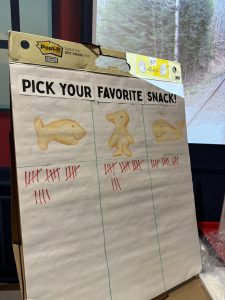
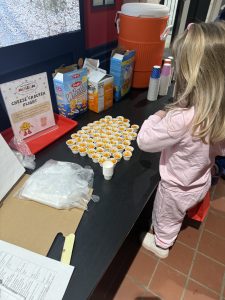
During our Noon Year’s Eve celebration, visitors put their taste buds to the test. Which cheese cracker would come out on top? Guests sampled a flight of three differently shaped crackers and voted for their favorite. Would the classic Goldfish swim to victory? Or would the cute penguin or the whale take the crown? All votes from both morning and afternoon sessions were tallied. It was a close contest, but in the end, the Goldfish swam away with the win!
Why Data Collection Matters for Kids
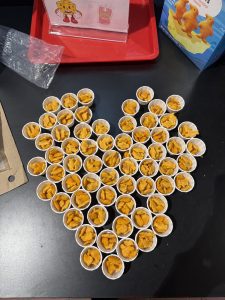
This simple activity is more than just a tasty challenge, it’s a way to introduce young learners to the concept of data collection. Over 100 visitors participated, which meant a lot of crackers to count! By marking tally marks on a chart, kids can organize the data so it’s easy to interpret. Later, that same chart can be turned into a bar graph, making it even easier to spot a “winner” by finding the tallest bar. Asking questions about the results encourages critical thinking. Why did more people choose Goldfish? Is it the familiar shape, or perhaps the flavor? Activities like this help children see how data can tell a story.
Bring Math and Data Literacy Home
You don’t have to come to the Museum to try it! Taste tests at home are a simple, hands-on way to explore data: Try colored Goldfish and see which color is the favorite. Use a fun-size bag of Skittles or M&M’s. Sort by color and see which one “wins.” Line them up to make a physical graph. Who has the longest line? Open a new bag and compare: do the results change? Why? Don’t want to play with food? Grab a handful of LEGOs, sort by color, and snap them together to create a graph. Why are there more blue pieces this time? Were there more in the bucket you grabbed from? These playful experiments let kids practice sorting, counting, surveying, and interpreting result s— all key skills for developing data literacy.
Building Confidence Through Data
Any activity that includes hands-on data collection helps children build confidence while learning important math skills. It’s easy, engaging, and fun!